How to Choose the Right Hook for Amigurumi
Hooks that catch us create art or vulgarity? Ally or – tyrant? Knit right. Find the ideal size.
You already have yarn, now you only need hooks!
Creating cute animals, characters and other figures is a great pleasure, but to make the result pleasing to the eye, it is important to choose the right tools. And, of course, without a hook, nothing will work!
The “right” hook affects the quality, density and appearance of your toy. And ultimately – your mood. So – let’s knit with pleasure!
Why is the choice of hook so important for amigurumi?
Unlike regular knitting, where airiness and drape are important, [amigurumi] requires a dense and even fabric. This is necessary for several reasons:
- The filler should not be translucent: Dense knitting ensures that the filler (holofiber, synthetic fluff, etc.) will not be visible through the loops, maintaining a neat appearance of the toy
- Shape retention: Dense fabric holds its shape better, which is especially important for voluminous amigurumi parts
- Neat loops: A correctly selected hook allows you to form even and identical loops, which makes the product more aesthetic
- Ease of knitting: A hook that is too thin can cause hand fatigue, and a hook that is too thick can make the loops loose
The main criteria for choosing a hook:
Hook size (diameter)
This is probably the most important parameter. The hook size is indicated in millimeters (for example, 2.0 mm, 2.5 mm, 3.0 mm). General rule for [amigurumi]: choose a hook 0.5-1.5 mm smaller than recommended on the yarn label.
Why is that? amigurumi yarn is usually medium or thin. If you use a hook recommended for this yarn, the fabric will be too loose. By decreasing the hook size, you “pull” the loops together, making the fabric denser.
How to determine the right size?
- Start with the yarn label: Look at the hook size the manufacturer recommends
- Subtract 0.5-1.5mm: For example, if the yarn says 3.0mm, try starting with 2.0mm or 2.5mm
- Try a swatch: This is the most reliable way. Take your chosen yarn and hook, and crochet a few rows of single crochet stitches. See how tightly the fabric is made. If the filling is visible, try a smaller hook. If knitting becomes too difficult, you may have chosen a hook that is too small
Examples:
- For Baby Cotton yarn (approx. 200-250 m/100 g), hooks of 1.75 mm – 2.5 mm are often used
- For thinner yarns (e.g. cotton for knitting lace), hooks of 1.0 mm – 1.5 mm may be needed
- For thicker yarns (e.g. plush yarn), hooks of 3.0 mm – 4.0 mm may be suitable
Hook material
Crochet hooks are made from different materials, each with its own advantages and disadvantages:
- Metal (steel, aluminum): Advantages: Durable, smooth, slide well on yarn, long-lasting, wide range of sizes. Disadvantages: Can be cold to the touch, some types of metal can cause allergies. Recommendations: An excellent choice for most types of yarn, especially cotton and acrylic
- Plastic: Advantages: Lightweight, warm to the touch, inexpensive. Disadvantages: Less durable than metal, can be rough, making it difficult for yarn to slide. Recommendations: Suitable for beginners, for working with thick yarn, for people with metal allergies
- Wooden: Advantages: Warm to the touch, environmentally friendly, pleasant to use. Disadvantages: Can be fragile, require careful handling, not always perfectly smooth. Recommendations: Suitable for working with natural yarn, for people who value tactile sensations
- Bamboo: Advantages: Lightweight, durable, smooth, eco-friendly. Disadvantages: Can be more expensive than plastic or metal. Recommendations: A good choice for most types of yarn, especially wool and cotton
Handle shape
The shape of the hook handle affects the comfort of knitting and reduces hand fatigue. There are several main types of handles:
- Classic: Simple and inexpensive, but can be uncomfortable during long knitting
- Ergonomic (with thickening): Has a thickened handle that fits comfortably in the hand, reducing the load on the joints
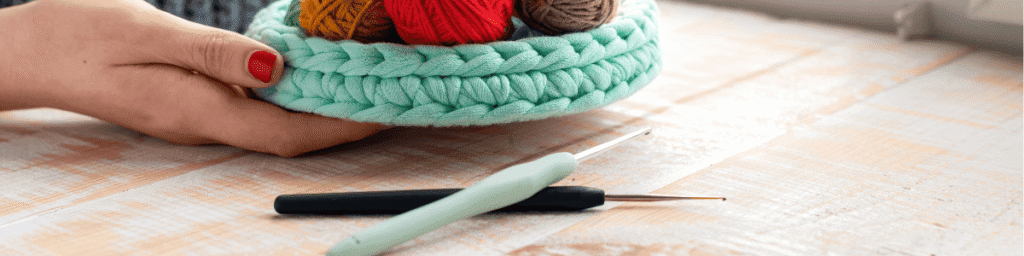
- Silicone: Covered with silicone, which provides good grip on the hand and prevents slipping
Recommendations: Choose the handle shape that is most comfortable for you. If you plan to knit a lot and often, it is worth investing in an ergonomic hook.
Hook Head Type
The shape of the hook head also affects how comfortable it is to knit. There are several basic types:
- Pointed: Good for thick yarns and intricate patterns
- Rounded: Better for soft yarns and beginner knitters
- Dimpled: Helps hold the loop on the hook
Recommendations: Choose a head type that suits your knitting style and the type of yarn.
Tips for choosing an amigurumi hook
- Start with a hook set: This will allow you to experiment with different sizes and materials to find what works best for you
- Don’t be afraid to try different hooks: What works for one crocheter may not work for another
- Pay attention to how you feel: It’s important that the hook fits comfortably in your hand, doesn’t cause discomfort, and doesn’t slip. If you feel tension in your fingers or wrist, try a different hook size, material, or handle shape
- Consider the type of yarn:
- Cotton: Generally requires a smaller hook for tight crochet
- Acrylic: Can be slipperier, so a hook with good grip (like a silicone handle) may be preferable
- Plush yarn: Requires a larger hook, but it’s still important to have a fairly tight yarn. Often, for plush yarn, hooks 0.5-1 mm smaller than recommended are used
- Wool: It can vary in texture, so experiment with the hook size to achieve the desired density
- Don’t skimp on quality: A good hook will serve you for a long time and make the knitting process more enjoyable. Cheap hooks can be poorly processed, have burrs that catch the yarn, or break quickly
- Pay attention to brands: There are well-known manufacturers that produce high-quality crochet hooks, such as Clover, Tulip, Pony, Addi. Although they may be more expensive, their quality justifies the price
- For beginners: If you are just starting out in amigurumi, start with a universal hook size, such as 2.5 mm or 3.0 mm, and medium-thickness yarn (such as cotton or acrylic). As you gain experience, you will be able to determine your preferences
How to Find the Perfect Hook for Your Yarn and Knitting Style
- Take the yarn you want to use
- Choose a few hooks in different sizes (e.g. 2.0mm, 2.5mm, 3.0mm)
- Knit a small swatch (about 10 stitches x 10 rows) with each hook using single crochets
- Evaluate the swatches:
- Density: How well does the fabric hide the stuffing? Are there any gaps?
- Stitch Shape: Are the stitches even? Are they too tight or too tight?
- Ease of Handling: Does the yarn slide easily on the hook? Do your fingers get tired?
- Choose the hook that gives the best results in all areas
Conclusion
Choosing the right hook for [amigurumi] is an individual process that requires a bit of experimentation. Don’t be afraid to try different options, listen to your feelings and remember that the main thing is the pleasure of the creation process. A properly selected hook will become your reliable assistant. Happy knitting!
Popular Products
-
 T-Shirt Three$15.00
 -
 Triangle$5.00
 -
 Product on saleT-Shirt OneOriginal price was: $15.00.$12.00Current price is: $12.00.